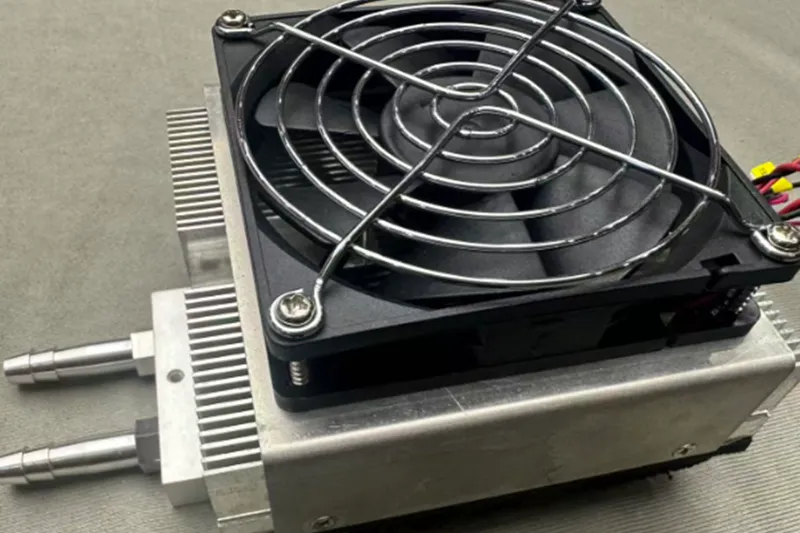
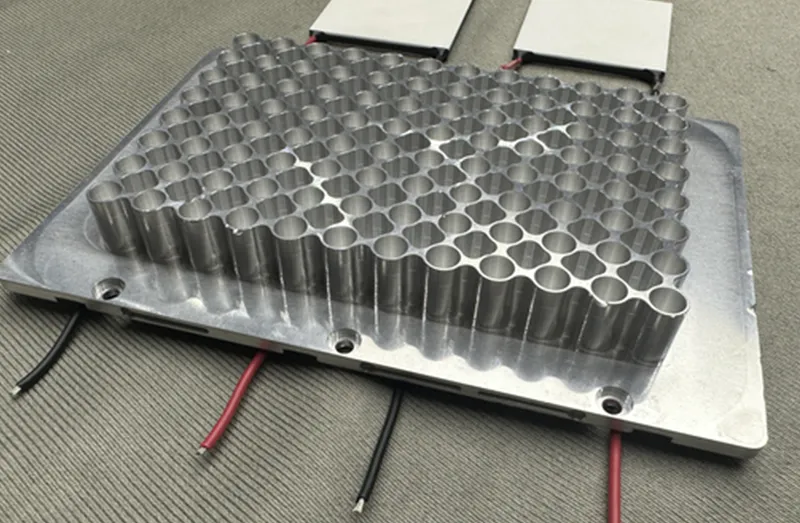
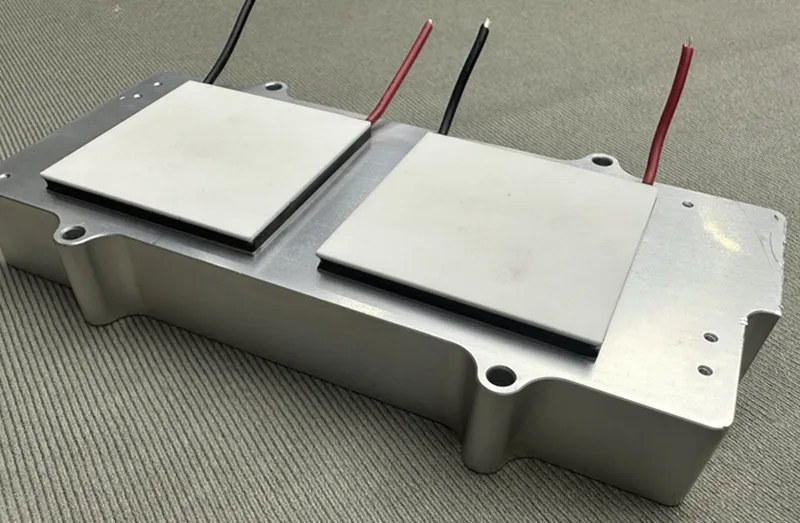
In fields such as precision electronics, medical equipment, and automotive systems, precise temperature control in small spaces is often required. The TEC (Thermoelectric Cooler), also known as a thermoelectric refrigerator, is a core device for meeting such needs. Based on the “Peltier effect” discovered by French physicist Jean Charles Peltier in 1834, it requires no refrigerants or mechanical moving parts. With its solid-state structure, it achieves silent, miniaturized, and precisely controllable refrigeration, making it a “temperature control tool” for many special scenarios.
1. Introduction: TEC’s Role in Precision Temperature Control
In fields such as precision electronics, medical equipment, and automotive systems, precise temperature control in small spaces is often required. The TEC (Thermoelectric Cooler), also known as a thermoelectric refrigerator, is a core device for meeting such needs. Based on the “Peltier effect” discovered by French physicist Jean Charles Peltier in 1834, it requires no refrigerants or mechanical moving parts. With its solid-state structure, it achieves silent, miniaturized, and precisely controllable refrigeration, making it a “temperature control tool” for many special scenarios.
2. Core Principle: How TEC Realizes Refrigeration
In terms of structure and principle, the core of a TEC consists of thermocouples made of P-type and N-type semiconductor materials. These two types of semiconductors have different carrier characteristics. When a direct current passes through the thermocouples, carriers migrate directionally at the material interface: holes in the P-type semiconductor and electrons in the N-type semiconductor absorb heat when they combine, forming a “cold side” at that end; while carriers release heat when they separate at the other end of the power supply, forming a “hot side”. Practical TECs are usually composed of multiple sets of thermocouples connected in series or parallel. By adjusting the current intensity, the cooling range of the cold side can be precisely controlled—it can not only achieve deep cooling of -50°C but also maintain a stable low-temperature environment as needed. This flexibility is irreplaceable by traditional compression refrigeration.
3. Key Challenge: Heat Accumulation on TEC’s Hot Side
However, TECs have a key characteristic: all heat absorbed by the cold side during operation is transferred to the hot side. At the same time, the current passing through the semiconductor materials also generates Joule heat, causing continuous heat accumulation on the hot side. If the heat on the hot side cannot be dissipated in a timely manner, the temperature difference between the cold and hot sides will decrease, significantly reducing refrigeration efficiency. In severe cases, the semiconductor materials may be burned due to excessive temperature on the hot side. Therefore, thermal management of the hot side is a core part of TEC applications.
4. Main Solution: TEC Matching with Heat Pipe Radiators
Among various thermal management solutions, the combination of “TEC + heat pipe heat sink” is currently the mainstream choice. As a high-efficiency heat transfer component, a heat pipe is filled with a low-boiling-point working fluid (such as pure water or ethanol). When heat from the TEC’s hot side is transferred to the evaporator section of the heat pipe, the working fluid quickly absorbs heat and vaporizes. The vapor flows to the condenser section under the action of pressure difference, releases heat and liquefies when in contact with the radiator fins, and the liquid flows back to the evaporator section through capillary force, forming a cycle of “phase change – heat transfer – condensation”. The efficiency of this phase-change heat transfer is dozens of times that of metal heat conduction, which can quickly transfer the heat from the TEC’s hot side to the radiator fins, laying a foundation for subsequent heat exchange.
5. Process Advantage: Differential Processing Improves Radiator Efficiency
The manufacturing process of the radiator directly determines the final efficiency of heat exchange. Traditional radiators mostly use the profile extrusion process, where fins are made by extrusion. Limited by the process, the fin density is low, the spacing is large, and there are often gaps at the junction of the fins and the base, which affects heat transfer. Nowadays, radiators supporting TECs more commonly adopt the differential processing technology. Through precision machining or etching technology, fins with higher density and more uniform thickness can be produced. At the same time, the fins and the base can be formed integrally, reducing thermal resistance. Compared with the profile extrusion process, radiators made by differential processing can increase the heat dissipation area by more than 30% and reduce thermal resistance by 25%, ultimately improving the overall heat dissipation efficiency by 40%, which perfectly meets the thermal management needs of TECs.
6. Practical Value: TEC’s Application and Performance Release
From temperature control of precision instruments in laboratories, low-temperature protection of automotive lidars to stable refrigeration of medical cold compress equipment, TECs play an important role in various fields with their unique advantages. The combination of “TEC + heat pipe radiator with differential processing” not only solves the heat dissipation problem of the TEC’s hot side but also fully releases its performance, providing reliable support for the development of precise temperature control technology in small spaces.