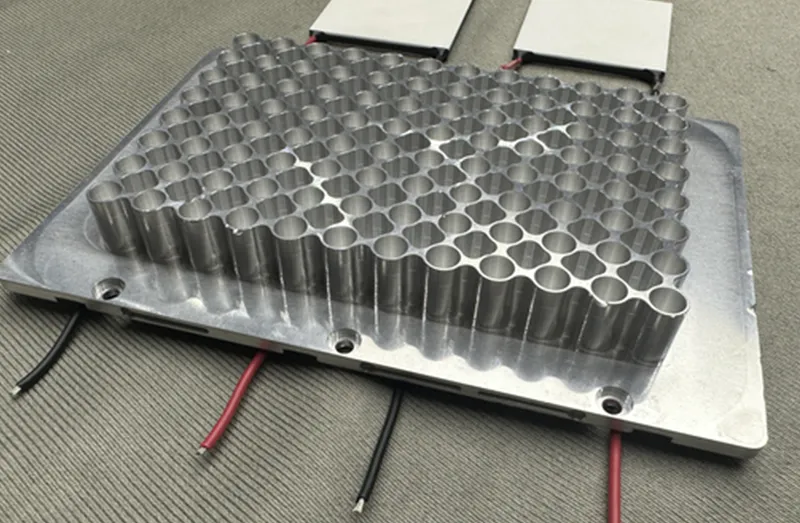
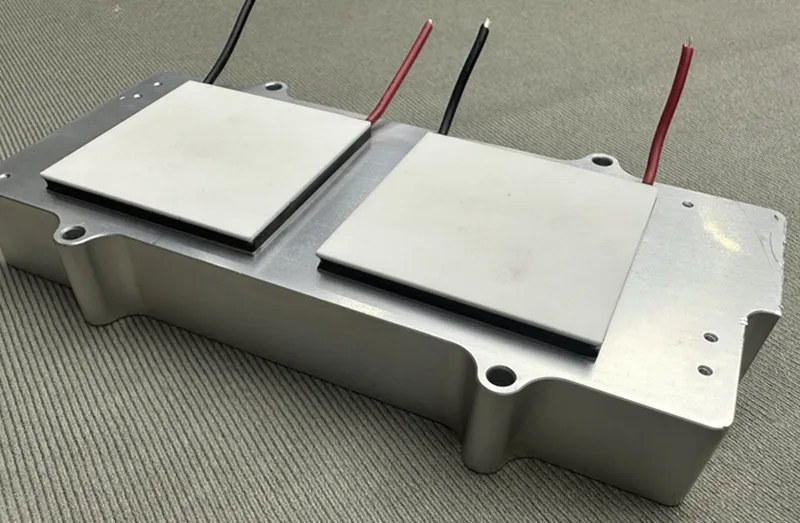
If you’ve ever wondered how small devices like mini-fridges for cars or CPU coolers manage to cool without noisy compressors or messy refrigerants, the answer often lies in Peltier coolers. These compact, solid-state devices rely on a clever physics phenomenon to move heat—and they’re becoming increasingly popular in fields where space, quiet, and precision matter. Let’s break down how they work, why they’re useful, and where they’re headed, using a clear “what-why-how” framework.
What Are Peltier Coolers?
First, let’s define the core of the technology: a Peltier cooler (also called a thermoelectric cooler, or TEC) is a solid-state device that transfers heat from one side to the other when an electric current is applied. Unlike traditional refrigerators, which use compressors and chemical refrigerants (like Freon) to cycle heat, Peltier coolers have no moving parts and depend entirely on the behavior of semiconductor materials.
At their simplest, a Peltier cooler is made of two key parts:
Semiconductor pairs: Thin, alternating strips of P-type (positively charged) and N-type (negatively charged) semiconductors, connected in a grid.Metal plates: Two ceramic or metal plates (one on each side of the semiconductor grid) that act as “cold” and “hot” surfaces. When current flows, one plate cools down (the “cold side”) and the other heats up (the “hot side”)—and this heat transfer is reversible (flip the current, and the sides swap roles).
Why Do Peltier Coolers Work? The Science Behind the Peltier Effect?
The magic of Peltier coolers comes from the Peltier Effect, a physical phenomenon discovered in 1834 by French physicist Jean Charles Peltier. Here’s the simplified science:
When an electric current passes through a junction of two different materials (in this case, P-type and N-type semiconductors), energy is either absorbed or released at the junction. For Peltier coolers, this creates a “heat pump” effect:
At the cold side junctions: Electrons (from the N-type semiconductor) and “holes” (from the P-type semiconductor) move across the junction and absorb heat from the surrounding area. This absorption cools the metal plate on that side.
At the hot side junctions: The same electrons and holes release the absorbed heat as they move to the next junction. This heat builds up on the opposite metal plate, which then needs to be dissipated (more on that later).
In short: The Peltier Effect turns electrical energy into a directional flow of heat—no moving parts, no chemicals, just pure physics.
3,How Do Peltier Coolers Work in Practice? Step-by-Step
While the Peltier Effect is the “why,” the “how” is about how we turn that science into a working device. Here’s a step-by-step breakdown of a Peltier cooler in action:
Step 1: Apply an Electric Current
First, a direct current (DC) is connected to the Peltier cooler’s terminals. This current pushes electrons through the N-type semiconductors and “holes” through the P-type semiconductors, starting the energy transfer process.
Step 2: Heat Absorption on the Cold Side
As electrons and holes move across the junctions on the cooler’s cold side, they soak up heat from the metal plate. For example, if the cold side is attached to a CPU or a small fridge compartment, it will pull heat away from that device/compartment, lowering its temperature.
Step 3: Heat Release on the Hot Side
The electrons and holes, now carrying the absorbed heat, move to the junctions on the hot side. Here, they release the heat onto the hot-side metal plate. Without removing this heat, the hot side would get too hot, and the cooler would stop working (this is why heat dissipation is critical).
Step 4: Dissipate the Hot Side Heat
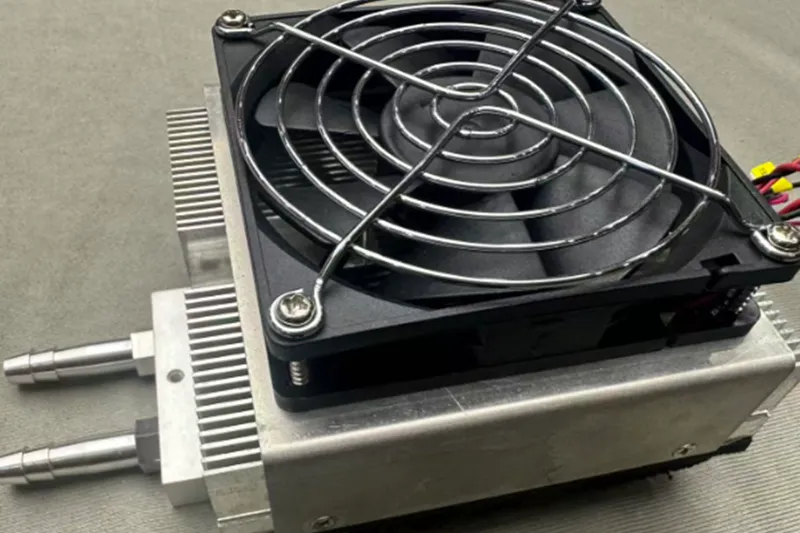
To keep the cooler running, the hot-side heat must be removed—usually with a heatsink (a metal block that spreads heat) and a fan (to blow the heat away). In some high-power setups, water cooling is used instead of fans for better efficiency.
Step 5: Control Temperature (Optional)
Many Peltier systems add a temperature sensor and a controller. The sensor monitors the cold side’s temperature, and the controller adjusts the current (e.g., reduces it if the cold side gets too cold) to keep the temperature stable—perfect for applications that need precision.
4,Where Are Peltier Coolers Used? Key Application Areas
Peltier coolers aren’t just a science experiment—they’re used in real-world products where their unique strengths (small size, quiet operation, precision) shine. Here are the most common fields:
Electronics cooling: They cool CPUs, GPUs, and laser diodes (used in printers or medical devices), where space is tight and noise from fans is unwanted.Portable refrigeration: Mini car fridges, camping coolers, and wine chillers use Peltier coolers—they’re lightweight and don’t need a power-hungry compressor.Medical devices: Lab equipment (like DNA amplifiers) and small medical tools (e.g., skin cooling devices for laser treatments) rely on their precision to maintain stable temperatures.Consumer gadgets: Some high-end camera lenses use Peltier coolers to prevent condensation, and small dehumidifiers use them to pull moisture from the air.Aerospace: In satellites or space probes, Peltier coolers cool sensitive instruments—they work in zero gravity (unlike compressors, which need gravity to circulate refrigerants).
5,Future Trends: Where Is Peltier Cooling Headed?
While Peltier coolers have been around for decades, new materials and designs are making them more efficient and versatile. Here are the top trends shaping their future:
Trend 1: Better Semiconductor Materials
Current Peltier coolers use materials like bismuth telluride, which are efficient but expensive. Researchers are testing new materials—like silicon-germanium alloys or “topological insulators”—that are cheaper, more durable, and can handle higher temperatures (making them useful for industrial cooling).
Trend 2: Higher Efficiency
One of the biggest drawbacks of Peltier coolers is low efficiency (they use more energy than compressors for large-scale cooling). New designs—like stacking multiple cooler layers (called “multi-stage TECs”) or adding nanocoatings to improve heat transfer—are boosting efficiency, opening the door to larger applications (e.g., small home fridges).
Trend 3: Integration with Renewable Energy
Peltier coolers work with DC power, which makes them perfect for pairing with solar panels. Future applications could include solar-powered camping coolers or off-grid medical fridges (critical for remote areas with no electricity).
Trend 4: Miniaturization for Microdevices
As electronics get smaller (think wearable tech or micro-robots), Peltier coolers are being shrunk to match. Tiny “micro-TECs” could soon cool wearable health monitors (preventing overheating on the skin) or microchips in IoT devices.
Wrapping Up: The Power of Simple Physics
Peltier coolers prove that even a 19th-century physics discovery can still drive 21st-century innovation. They’re not the right choice for every cooling need (they’re not efficient enough for large fridges or air conditioners), but their small size, quiet operation, and precision make them irreplaceable in niche—and growing—fields.
Whether you’re using a car fridge on a road trip or relying on a medical device to stay healthy, chances are a Peltier cooler is working behind the scenes. And as new materials and designs emerge, we’ll likely see these clever little devices pop up in even more places.