
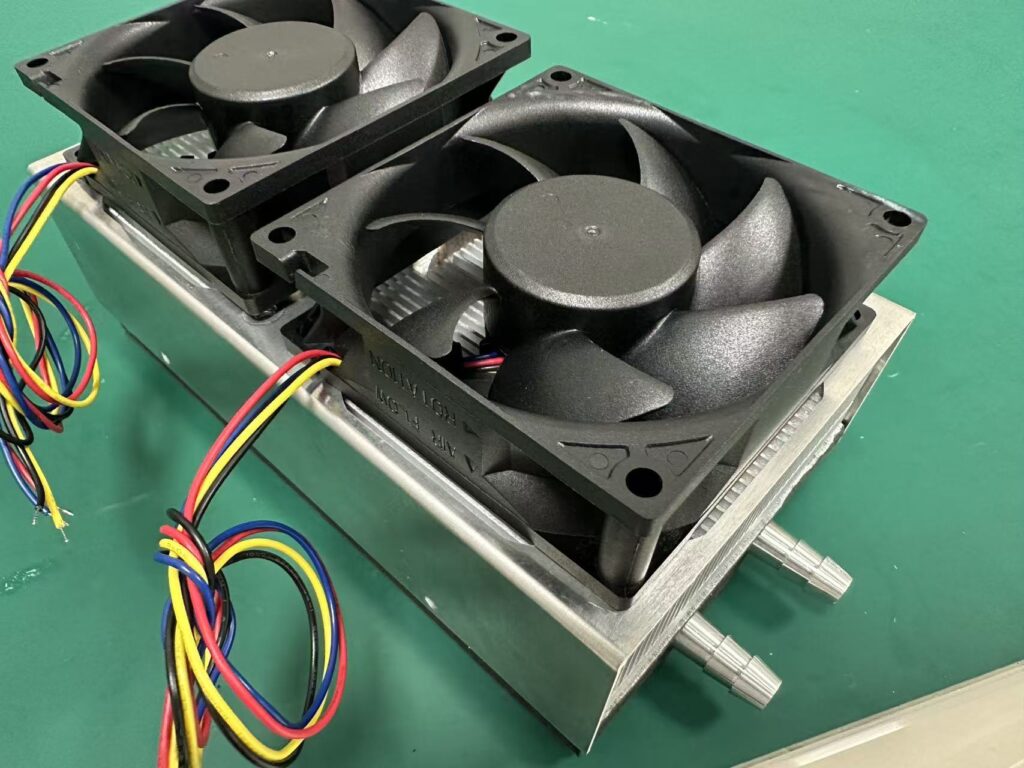
Semiconductor Refrigeration Development History: Principles, Technology Evolution and Industrial Commercialization of TEC Cooling
Abstract: Semiconductor refrigeration, also known as thermoelectric cooling (TEC), is a solid-state cooling technology different from traditional compression refrigeration and absorption refrigeration. It features no refrigerant, no mechanical moving parts, high temperature control accuracy and fast response speed, serving as the core technology in the fields of precision temperature control, micro refrigeration and special refrigeration. Over the past two centuries, evolving from a simple physical phenomenon discovered in laboratories, semiconductor refrigeration has gone through four key stages including theoretical improvement, material breakthrough, process iteration and cost reduction. It has completely stepped out of the niche laboratory research scope and achieved full commercial application in military special scenarios, industrial precision temperature control and civilian consumer electronics. Taking the timeline as the core clue, this paper objectively reviews the evolution logic, technical bottlenecks and industrialization breakthrough path of semiconductor refrigeration technology, sorts out the industry development pain points and future trends, and provides a reference for the research, industrial application and academic study of thermoelectric cooling technology.
Keywords: Semiconductor Refrigeration; TEC Thermoelectric Cooling; Peltier Effect; Thermoelectric Materials; Solid-State Refrigeration; Industrial Commercialization; Precision Temperature Control; Semiconductor Cooling Technology
1. Embryonic Stage (19th Century): Physical Effect Discovery & Theoretical Foundation of Semiconductor Refrigeration
The core principle of semiconductor refrigeration is not a modern technological product, but a major discovery in classical electromagnetic thermodynamics in the 19th century. The theoretical research completed in this century has laid a solid underlying physical foundation for subsequent technological implementation and constitutes the core origin that distinguishes semiconductor refrigeration from other cooling technologies.
In 1821, German physicist Seebeck first discovered the core thermoelectric conversion phenomenon: when two different metal conductors form a closed loop, an induced current will be generated by temperature difference. Named the Seebeck effect, this phenomenon firstly confirmed the direct mutual conversion between thermal energy and electric energy, and became the fundamental starting point for thermoelectric power generation and thermoelectric cooling technologies. However, limited by the research perspective at that time, Seebeck failed to explore the reversibility of this effect and connect it with cooling application scenarios.
In 1834, through a large number of conductor electrification experiments, French physicist Peltier made a groundbreaking discovery of the inverse effect of the Seebeck effect. When direct current passes through the contact interface of two different conductors, a stable differential heat absorption and heat release phenomenon occurs at the interface, with one end continuously cooling down and the other continuously heating up. This is the Peltier Effect that supports modern semiconductor refrigeration. Compared with the temperature difference power generation of the Seebeck effect, the Peltier effect directly realizes “electric energy to temperature difference refrigeration” and formally defines the core principle of thermoelectric cooling.
In 1851, Lord Kelvin systematically deduced thermodynamics, uniformly explained the internal correlation between the Seebeck effect and Peltier effect, supplemented the Thomson effect, improved the thermodynamic theoretical system of the three major thermoelectric effects, and completely closed the physical logic of thermoelectric conversion.
Throughout the 19th century, relevant research only stayed in the stage of laboratory phenomenon observation and theoretical derivation. At that time, the research carriers were all ordinary metal conductors, which had extremely low thermoelectric conversion efficiency and weak temperature difference effect, with no practical application value at all. In addition, the Industrial Revolution at that time focused on steam power and mechanical refrigeration technology iteration, and there was no industry demand for micro and precision solid-state refrigeration. As a result, the thermoelectric refrigeration principle was shelved for nearly a century, remaining in a laboratory dormant state of “theoretically feasible but impractical”.
2. Dormant Breakthrough Stage (Early 20th Century – 1950s): Thermoelectric Material Innovation Breaks Semiconductor Cooling Technical Shackles
In the first half of the 20th century, the performance bottleneck of traditional metal conductors could not be broken through, the thermoelectric refrigeration efficiency remained at an extremely low level, and the technological development fell into stagnation. With the rise of semiconductor material science, the industry realized that the poor thermoelectric performance of metal conductors stemmed from disorderly carrier movement and low energy level matching. In contrast, semiconductor materials could greatly improve thermoelectric conversion efficiency through doping modification and component optimization, and this cognitive change launched the technological innovation wave of semiconductor refrigeration.
In the 1940s, the global semiconductor industry took initial shape, basic semiconductor materials such as silicon and germanium realized purification and preparation, and researchers began to systematically test the thermoelectric properties of various semiconductor compounds, gradually screening out material systems suitable for refrigeration scenarios. After World War II, the demand for military special refrigeration exploded. Aerospace, radar detection and precision instruments had an urgent need for vibration-free, refrigerant-free and high-reliability refrigeration technology. Traditional compression refrigeration had the disadvantages of large volume and mechanical loss, and could not adapt to extreme working conditions, making the technical advantages of semiconductor refrigeration re-recognized.
In 1954, the Ioffe Team of the USSR Academy of Sciences made a landmark breakthrough. A large number of experiments verified the excellent thermoelectric refrigeration performance of bismuth telluride (Bi₂Te₃) based solid solution. With extremely low thermal conductivity, high Seebeck coefficient and electrical conductivity, this material perfectly balances the core performance indicators of thermoelectric refrigeration, becoming the world’s first thermoelectric refrigeration material with practical value and completely solving the problem of lacking available materials for semiconductor refrigeration.
In the same period, Bell Labs in the United States carried out synchronous research on thermoelectric semiconductor materials, optimized the doping process of bismuth telluride materials, distinguished the carrier characteristics of N-type and P-type semiconductors, and built a basic semiconductor thermoelectric pair structure. At this point, semiconductor refrigeration completed the leap from “pure theory” to “experimentally verifiable technology”, clearing the core material obstacles for subsequent deviceization and industrial production.
3. Technology Maturity Stage (1960s – 1990s): TEC Device Iteration & Military-to-Civil Popularization of Semiconductor Refrigeration
Supported by the maturity of the bismuth telluride material system, semiconductor refrigeration entered the device R&D stage in the 1960s, and the first standardized thermoelectric cooler (TEC) chip was successfully developed. Semiconductor refrigeration officially moved from laboratory principle research to engineering application. The core development goals of this stage were structural optimization, process finalization and scenario trial application, focusing on meeting the needs of high-end special fields.
From the 1960s to 1970s, the two major technological powers of the United States and the Soviet Union took the lead in realizing the engineering implementation of semiconductor refrigeration devices. The Soviet Union focused on military scenarios, applying TEC devices to aerospace satellite temperature control, military radar and submarine precision equipment refrigeration; the United States focused on industrial precision detection and medical instrument temperature control to optimize device stability and temperature control accuracy. At this stage, TEC products had high costs and low production capacity, only serving high-value-added special fields and unable to be popularized in the civilian market.
In the 1980s, with the upgrading of semiconductor precision processing technology, the packaging, cutting and welding processes of TEC devices were continuously optimized, the yield of single refrigeration chips was greatly improved, and the devices became more miniaturized and structurally standardized. The development and application of multi-stage stacked refrigeration structures solved the problem of limited temperature difference of single-stage TEC, greatly expanded the refrigeration temperature range, and enabled semiconductor refrigeration to adapt to low-temperature and deep-cooling scenarios.
The 1990s was a critical turning point for the industrialization of semiconductor refrigeration. The rapid rise of the global optical communication industry put forward a temperature control accuracy requirement of ±0.1℃ for fiber lasers and optical modules, which could not be met by traditional refrigeration methods. Miniature TEC chips became the core temperature control components of optical communication equipment, driving explosive growth in market demand. This rigid demand scenario promoted the industry to explore large-scale mass production and drove the participation of China’s domestic industry.
In the mid-1990s, China began to import TEC devices to support the optical communication and precision instrument industries, but the domestic localization rate was less than 10%, with core technologies and production capacity completely monopolized by foreign countries. Domestic research institutes began to follow up on research in materials, devices and packaging technologies, laying the foundation for subsequent localized industrialization. Overall, in the 1990s, semiconductor refrigeration expanded from “military exclusive use” to “industrial precision scenarios” and initially possessed commercial attributes.
4. Industrial Implementation Stage (2000 – 2015): Domestic Technology Breakthrough & Large-Scale Commercialization of Semiconductor Cooling
Since the 21st century, driven by national policy support for the electronic information industry and the expanding demand of downstream consumer electronics and industrial equipment, semiconductor refrigeration has completely broken through technical and capacity barriers, realized domestic substitution, large-scale mass production and multi-scenario commercial implementation, and completed the transformation from a niche special technology to a general refrigeration technology.
After 2000, supported by the 863 Program and special funds for the electronic information industry, domestic enterprises and research institutes jointly tackled key problems, gradually breaking through core technologies such as bismuth telluride material purification, chip cutting, vacuum packaging and multi-stage refrigeration structure design, and completely breaking foreign technological monopolies. Represented by Fuxin Technology and Jingxue Electronics, local enterprises took the lead in realizing small-batch mass production of TEC chips. The accuracy and stability of domestic products gradually reached international standards, greatly reducing the procurement cost of global semiconductor refrigeration devices.
The decade from 2005 to 2015 was the golden period for large-scale industry expansion. With the continuous iteration of production processes, automated production lines gradually replaced manual packaging, the product yield increased from less than 70% to more than 95%, and the unit production cost dropped significantly, laying a price foundation for the popularization of the civilian market. Application scenarios were fully covered: the industrial field expanded to constant temperature control for industrial control equipment, laser equipment and detection instruments; the commercial field landed in vehicle refrigerators, commercial dehumidifiers and small cold chain equipment; the civilian consumer field penetrated portable refrigeration fans, cosmetic refrigerators, vehicle cooling and heating boxes and other products.
During this stage, the industrial logic of semiconductor refrigeration underwent a fundamental change, shifting from “technology-driven R&D” to “market-driven mass production iteration”. The industry formed a complete industrial chain covering raw material purification, chip manufacturing, device packaging and terminal application. A standardized TEC product system took full shape, with full-category products of high and low power, single and multi-stage, micro and high power covering all scenario demands, marking the full maturity of the industrial commercial system.
5. High-Quality Iteration Stage (2016 – Present): Advanced Upgrade & Full-Scenario Application of Modern Semiconductor Refrigeration
In the past decade, traditional compression refrigeration has faced prominent pain points such as refrigerant environmental pollution, structural volume limitations and noise vibration. Semiconductor refrigeration’s advantages of fluorine-free environmental protection, silent solid-state operation and precise temperature control have become increasingly prominent. The industry has entered a high-quality iteration stage, focusing on performance upgrading, in-depth development of segmented scenarios and research and development of new materials instead of mere large-scale mass production.
In traditional application fields, TEC devices have achieved continuous miniaturization, high precision and low power consumption. 5G/6G optical modules, lidar, semiconductor detection equipment and biomedical constant temperature equipment have increasingly higher requirements for temperature control accuracy, response speed and stability. By optimizing material components, improving packaging structures and upgrading circuit matching schemes, the industry has launched customized high-precision TEC products with a temperature control accuracy of up to ±0.05℃, becoming a rigid supporting facility for high-end precision manufacturing.
In emerging civilian scenarios, semiconductor refrigeration has rapidly penetrated new energy vehicles, smart home appliances and portable wearable devices. It is widely applied in new energy vehicle vehicle cooling and heating boxes, auxiliary battery thermal management temperature control, seat temperature control, as well as smart home small wine cabinets, cosmetic refrigerators, desktop refrigeration equipment and outdoor portable refrigeration devices. These emerging product categories have made semiconductor refrigeration a core technology for differentiated innovation in consumer electronics.
In terms of cutting-edge technology research and development, the industry has gradually broken the performance upper limit of traditional bismuth telluride materials. New nanometer thermoelectric materials, flexible thermoelectric materials and high-efficiency composite thermoelectric materials are under continuous research and testing, aiming to improve refrigeration efficiency, expand the operating temperature range and reduce raw material costs. At the same time, technological iterations such as multi-stage composite refrigeration, integrated cooling and heating temperature control and intelligent frequency conversion temperature control have solved the industry pain points of low energy efficiency and high power consumption under large temperature differences in traditional semiconductor refrigeration.
At present, the global semiconductor refrigeration industry has formed a mature competitive pattern. China has become the world’s largest production, processing and export base of TEC devices, with a domestic localization rate exceeding 90%. Its products cover most global terminal markets, completing the industrial leap from technology introduction and imitation innovation to independent iteration and global leadership.
6. Development Summary, Industry Pain Points & Future Trends of Semiconductor Refrigeration Technology
6.1 Review of Core Development Logic
Reviewing the 200-year development process, the development history of semiconductor refrigeration is a complete closed-loop evolution ofphysical theory precipitation, material technological breakthrough, process mass production iteration and market scenario expansion. The 19th century completed theoretical foundation and solved the problem of “feasible principle”; the mid-20th century achieved material breakthroughs and realized “available technology”; the late 20th century completed device engineering and reached “qualified performance”; the 21st century realized industrial mass production and domestic substitution to achieve “controllable cost and large-scale implementation”; the current stage focuses on performance upgrading and scenario exploration to maximize technical value.
Compared with traditional refrigeration technology, the development rhythm of semiconductor refrigeration relies more on the progress of material science. Every industrial leap is corely driven by breakthroughs in material performance and preparation technology, which is the essential development characteristic that distinguishes thermoelectric refrigeration from mechanical refrigeration.
6.2 Existing Industry Pain Points
Despite the mature commercial implementation, semiconductor refrigeration still has core shortcomings. First, its overall thermoelectric conversion energy efficiency is lower than that of traditional compression refrigeration, making it unable to replace traditional refrigeration technology in high-power and large temperature difference refrigeration scenarios. Second, there are still partial foreign technical barriers in high-end special materials and ultra-high precision devices. Third, the industry suffers from serious low-end homogeneous competition, with most small and medium-sized manufacturers focusing on general products and lacking R&D capabilities for high-end customized and high-value-added products.
6.3 Future Development Trends
The future development of semiconductor refrigeration will present three core trends. First, continuous breakthroughs in material innovation will promote the industrialization of new high-efficiency thermoelectric materials, break the energy efficiency bottleneck and expand high-power refrigeration application scenarios. Second, intelligent and integrated upgrading will be realized. TEC devices will be combined with intelligent temperature control chips and IoT systems to achieve accurate, energy-saving and adaptive temperature control, adapting to emerging tracks such as intelligent manufacturing, new energy and high-end medical treatment. Third, in-depth customization for segmented scenarios will be carried out. Specialized and high-reliability products will be developed for high-end fields such as vehicle thermal management, precision semiconductor equipment, biomedicine and aerospace, helping the industry get rid of low-end homogeneous competition and upgrade towards high value-added directions.
Conclusion
From a laboratory physical phenomenon in the 19th century to a core solid-state refrigeration technology with full-scenario industrial commercialization today, semiconductor refrigeration has gone through two centuries of dormancy and iteration, forming a characteristic industrial development path of “theory first, material breakthrough, process implementation and market empowerment”. Under the background of dual-carbon goals, environmental protection upgrading and rapid development of precision manufacturing, semiconductor refrigeration technology with the advantages of fluorine-free, silent, high-precision and high-reliability performance will continuously replace traditional refrigeration market segments. It will release greater industrial value in new energy, smart hardware, high-end equipment manufacturing, medical technology and other fields, and become a core driving force for the differentiated and high-end development of the refrigeration industry.