
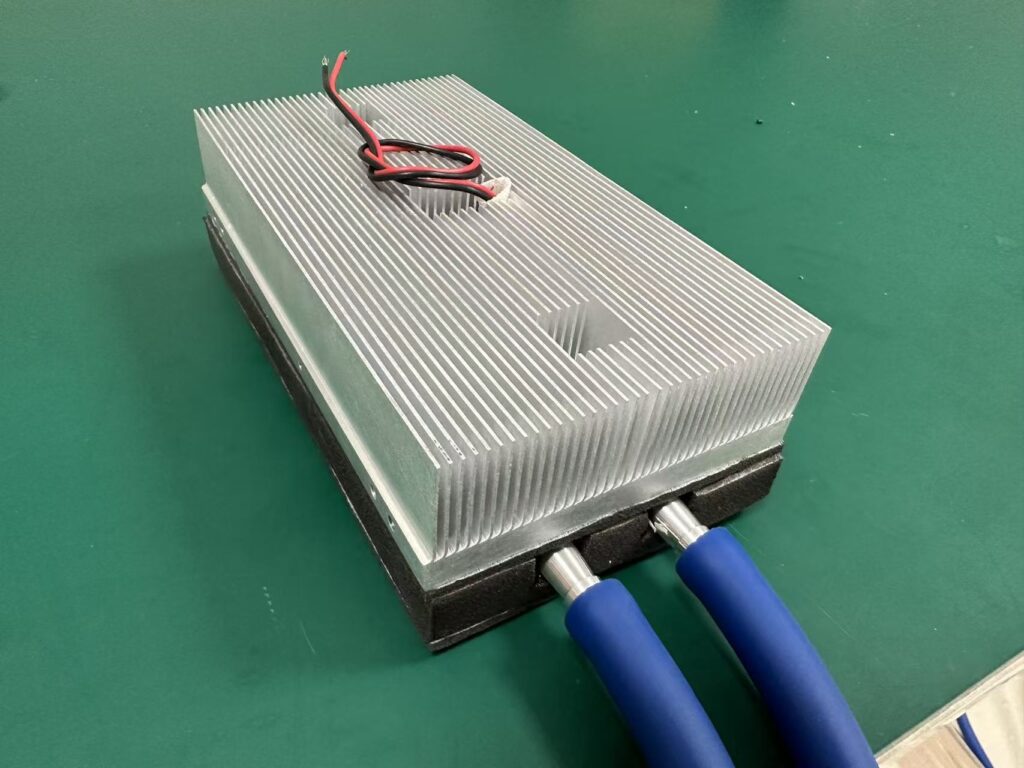
Abstract
Peltier Refrigeration Safety (TEC, Peltier refrigeration) is widely applied in vehicle refrigeration, medical temperature control, laser equipment, smart home, industrial precision cooling and other scenarios due to its core advantages of no mechanical movement, no refrigerant, precise temperature control and compact size. Compared with traditional compressor refrigeration, TEC features a simple structure and strong adaptability, yet its insufficient safety and stability have become core bottlenecks restricting its long-term commercial and industrial implementation. Industry data shows that over 90% of Peltier refrigeration equipment failures stem from three major risks: electric leakage, condensation short circuit and high-temperature burnout. Most equipment failures are not caused by natural aging but by human errors in design, installation and operation & maintenance processes. As a professional Peltier refrigeration manufacturer, ZICOTEC focuses on the customized design and mass production of high-efficiency heat sinks and liquid cold plates, delivering optimized thermal management solutions to solve heat accumulation and heat dissipation mismatch issues that trigger most TEC safety failures. Based on the core working principle of TEC, this paper deeply analyzes the generation mechanism, failure logic and hidden hazards of the three major risks, and proposes implementable and standardized risk avoidance schemes from four dimensions including hardware selection, structural design, circuit matching and operation & maintenance specifications. It provides systematic safety design references for developers, engineers and equipment operation & maintenance personnel, so as to comprehensively improve the service life and operational stability of Peltier refrigeration equipment.
Keywords: Peltier Refrigeration; TEC Cooling Chip; Electric Leakage Risk; Condensation Prevention; High-Temperature Burnout; Equipment Safety; Thermal Management; Liquid Cold Plate; Heat Sink Design
1. Introduction: Safety Status and Core Pain Points of Peltier Refrigeration
Based on the Peltier effect, Peltier refrigeration realizes directional heat migration through DC-driven semiconductor thermocouple pairs. Without mechanical structures such as compressors and refrigerant fans, it features instant start-stop, bidirectional temperature control and high-precision temperature regulation, perfectly adapting to miniaturized, precise and silent temperature control scenarios. However, there is a common cognitive misunderstanding in the public and partial engineering design: TEC cooling chips with simple structures are considered low-fault devices that do not require complex safety protection design.
In practical engineering applications, TEC is a highly sensitive electronic thermal device with low fault tolerance. Its ceramic substrate, internal thermoelectric grains and welding spots are fragile structures. Changes in multi-dimensional environments including electricity, heat and humidity continuously induce various safety faults. Among them, electric leakage, condensation corrosion short circuit and high-temperature overheating burnout are three fatal risks, which will not only cause equipment shutdown and refrigeration failure, but also trigger safety accidents such as circuit short circuit, equipment fire and precision component damage.
Most current industrial fault solutions only focus on single problem repair, lacking systematic risk tracing and pre-protection logic. Breaking through the single fault troubleshooting mindset, this paper analyzes risk sources from the principle level and builds a full-process safety system of “pre-prevention, in-process monitoring and post-protection” combined with industrial practical experience, so as to completely eliminate core potential safety hazards of Peltier refrigeration equipment.
2. Core Principles and Basic Safety Logic of Peltier Refrigeration
The core structure of a TEC cooling chip consists of alternating series-connected N-type and P-type semiconductor thermoelectric grains, with insulating ceramic substrates attached to both ends. DC power supply realizes heat exchange between cold and hot ends: when current flows forward, the cold end absorbs ambient heat and the hot end releases heat outwards, completing the refrigeration cycle.
Its safe operation relies on three core premises, which are also the underlying logic for all risk avoidance:
1. Electric Balance: The input voltage and current match the rated parameters of the chip, with no overvoltage, overcurrent, electric leakage or voltage fluctuation;
2. Thermal Balance: The heat dissipation efficiency of the hot end is greater than or equal to the heat absorption efficiency of the cold end, avoiding heat accumulation and heat backflow;
3. Humidity Balance: The temperature of cold and hot ends matches the ambient dew point temperature, with no condensation generation or water vapor intrusion into the structure.
All failures including electric leakage, condensation and high-temperature burnout essentially result from the breakdown of the above three balances. The subsequent risk analysis and avoidance schemes in this paper are all developed based on this underlying logic.
3. In-Depth Tracing and Hazard Analysis of Three Core Safety Risks
3.1 Electric Leakage Risk: Hidden Electrical Hazards Triggering Short Circuits and Electric Shock Accidents
Electric leakage of Peltier refrigeration is a high-frequency hidden fault with no obvious equipment abnormalities in the initial stage, making it difficult to detect. Long-term leakage will gradually corrode circuits and break down chips, and in severe cases, cause personal electric shock, power supply burnout, equipment fire and other accidents. Different from electric leakage of ordinary electronic devices, TEC electric leakage has strong scenario-specific characteristics, which is mainly divided into three types: device body leakage, structural environmental leakage and circuit matching leakage.
3.1.1 Generation Mechanism of Electric Leakage
First, device body defects. Fine cracks on the ceramic substrate of TEC cooling chips, virtual welding of internal thermoelectric grains, and unqualified packaging and potting processes will reduce the insulation performance of devices, causing tiny current leakage after power-on. Long-term operation and thermal expansion and contraction will expand cracks, continuously increase leakage current, and eventually trigger local short circuits. Meanwhile, long-term high and low temperature cycle operation of TEC will cause fatigue aging of internal welding spots, further leading to insulation failure and aggravated electric leakage.
Second, environmental humidity-induced leakage, which is the primary cause of electric leakage. Condensed water generated by cold end condensation and ambient high-humidity water vapor will adhere to TEC pins, circuit boards and ceramic substrate surfaces, forming conductive leakage loops through water vapor. Compared with dry environments, the insulation resistance of TEC in high-humidity environments drops by more than 80%, easily causing cross-pole leakage and ground leakage.
Third, non-standard circuit and installation operations. Unstable power supply voltage, reverse positive and negative connection, damaged wire insulation layer, residual metal impurities during installation, and excessive overflow of thermal grease covering pins will all cause electrical insulation failure and induce electric leakage faults.
3.1.2 Core Hazards
Slight electric leakage will lead to reduced refrigeration efficiency, abnormal power consumption and temperature control accuracy drift; moderate electric leakage will corrode TEC electrodes and circuit board copper foils, causing poor contact and intermittent shutdown; severe electric leakage will directly trigger power short circuits and chip breakdown, and interfere with precision sensor signals in industrial equipment, resulting in the loss of control of the entire system.
3.2 Condensation Risk: “Invisible Killer” of TEC Equipment Inducing Cascading Failures
Condensation is the most frequent and easily ignored risk of Peltier refrigeration equipment, and the source of more than 90% of TEC short circuit, corrosion and failure faults. Most developers mistakenly believe that condensation only forms surface water droplets with no serious hazards. In fact, condensation will induce cascading failures such as electric leakage, corrosion, icing and structural damage, serving as the core cause of short equipment service life.
3.2.1 Core Generation Principle of Condensation
Ambient air contains a fixed concentration of water vapor, corresponding to a critical dew point temperature. When the surface temperature of the TEC cold end is lower than the ambient dew point temperature, water vapor in the air will liquefy when encountering cold, forming condensed water on the surfaces of the cold end, cavity and pipelines; if the cold end temperature is lower than 0°C, the condensed water will further freeze and frost, and form ponding after melting, aggravating water vapor penetration.
There is a highly misleading universal protection misunderstanding in the industry: simple shell dust prevention and increased cooling fans cannot prevent condensation. On the contrary, fan convection accelerates air circulation, brings in more moisture and aggravates condensation. Meanwhile, some designs only focus on cold end protection and ignore the temperature difference conduction between cold and hot ends and cavity tightness, leading to continuous hidden condensation.
3.2.2 Cascading Hazards of Condensation
Firstly, conductive condensed water directly causes short circuit and electric leakage of TEC pins and circuit boards, burning out chips instantly. Secondly, condensed water continuously corrodes internal welding spots and thermoelectric grains of TEC, causing oxidation and falling off of welding spots, fracture of grains and open circuit faults. Finally, expansion stress generated by alternating freezing and melting squeezes the ceramic substrate and causes cracks, completely damaging the refrigeration module. Meanwhile, ponding will breed mold, corrode equipment metal structures and reduce the overall tightness of equipment.
3.3 High-Temperature Burnout Risk: Instant Fatal Failure Leading to Device Scrap
High-temperature overheating burnout is the most fatal and irreversible failure of Peltier refrigeration, featuring sudden occurrence and thorough damage. TEC devices have extremely poor heat resistance. When the hot end temperature exceeds the rated threshold, welding spot melting, substrate cracking and grain carbonization will occur within seconds. The damaged devices are irreparable and can only be replaced directly.
3.3.1 Core Causes of High-Temperature Burnout
First, heat dissipation system failure, the primary cause of burnout. TEC refrigeration is essentially heat migration, and heat at the hot end must be exported in a timely manner. Failure to install radiators, mismatched radiator selection, fan jamming, dried or irregularly coated thermal grease will cause heat accumulation at the hot end and heat backflow to the cold end, forming a vicious cycle and rapid temperature surge. No-load power-on is strictly prohibited; power-on without fixed heat dissipation structures at both cold and hot ends will scrap the chip within seconds.
Second, excessive operating parameters. When the input voltage and current exceed the TEC rated parameters, long-term full-load and overload operation will sharply increase device power consumption, and heat generation far exceeds the heat dissipation limit. Meanwhile, high-temperature closed environments with no ventilation will further aggravate heat accumulation.
Third, non-standard installation processes. Excessive installation pressure damages internal welding spots, causing abnormal local resistance and concentrated heat generation; insufficient pressure leads to excessive contact thermal resistance, reduced heat dissipation efficiency and local high-temperature overheating; excessively thick or uneven thermal grease will greatly increase thermal resistance and induce local heat accumulation and burnout.
3.3.2 Fault Characteristics and Hazards
High-temperature burnout is divided into progressive aging burnout and instantaneous breakdown burnout. Progressive failures are characterized by continuous decline in refrigeration efficiency, increased equipment power consumption, reduced temperature difference between cold and hot ends, and a more than 20% increase in TEC resistance compared with the initial value; instantaneous failures are manifested as rapid heating and smoking after power-on with no refrigeration effect, directly causing short circuit, open circuit and chip carbonization and scrapping. In severe cases, high temperature will conduct to surrounding precision components and damage the entire equipment.
4. Full-Dimensional Standardized Risk Avoidance Solutions
4.1 Electric Leakage Avoidance: Insulation Optimization + Circuit Protection + Regular Detection
A four-level protection system of “structural insulation + circuit voltage stabilization + process standardization + regular inspection” is constructed to address the multi-dimensional causes of TEC electric leakage and completely eliminate hidden electrical safety hazards.
1. Structural Insulation and Moisture Isolation Optimization
Carry out overall insulation protection for TEC cooling chips, and seal and pot the chip edges and pin roots with special high-temperature resistant waterproof potting glue to block water vapor intrusion paths; install insulating and heat-isolating gaskets between the cold end and equipment cavity to avoid leakage loops formed by direct contact between metal structures and chips; apply three-proof coating on circuit boards to improve insulation performance in high-humidity environments. Meanwhile, strictly control the coating range of thermal grease to prevent overflow covering pins and welding spots, eliminating leakage induced by residual conductive media.
2. Circuit System Safety Protection Design
Select power supplies matching TEC rated parameters, and adopt regulated and constant-current power supplies to avoid voltage fluctuation, overvoltage and overcurrent; install fuses, varistors, leakage protection modules and anti-reverse diodes in the circuit to prevent insulation damage caused by instantaneous voltage impact and positive-negative reverse connection; optimize wiring processes, adopt high-temperature resistant insulated wires, arrange circuits to avoid extrusion damage, and keep circuits dry and clean without residual metal impurities.
3. Standardized Daily Inspection and Maintenance Specifications
Establish a monthly inspection mechanism, and measure the insulation resistance of TEC positive and negative poles with a multimeter. Stop operation for troubleshooting immediately if the resistance value decreases significantly or fluctuates compared with the initial state; increase inspection frequency in high-humidity scenarios, and clean surface water vapor and stains in a timely manner to avoid cumulative faults caused by long-term micro-leakage.
4.2 Condensation Risk Avoidance: Anti-Condensation Temperature Control + Sealed Moisture Isolation + Intelligent Monitoring
Adopt the four-dimensional protection logic of “source control, condensation blocking, monitoring and dehumidification”, abandon the inefficient single sealing protection method, eliminate condensation hazards from the source, and adapt to various complex working conditions with high and low temperatures and high humidity.
1. Precise Temperature Control to Avoid Dew Point Condensation
Install high-precision dew point sensors and linked temperature control systems to monitor ambient temperature, humidity and dew point temperature in real time, and intelligently adjust TEC operating power to ensure that the cold end surface temperature is always 5°C higher than the ambient dew point temperature, preventing water vapor liquefaction and condensation from the source. For low-temperature and high-humidity scenarios, equip miniature heating belts to preheat the cold end in standby state and avoid condensation and icing during low-temperature static placement.
2. Fully Sealed Moisture-Proof Structural Design
Fully seal the cold end refrigeration cavity, and block gaps with silicone sealing rings and waterproof foam to prevent external humid air from flowing in; fill closed cavities with dry nitrogen or inert gas for high-end precision equipment to completely isolate water vapor contact; coat the cold end surface with PTFE hydrophobic coating to prevent adhesion and accumulation of trace water vapor and realize rapid slipping and volatilization, avoiding water penetration.
3. Reasonable Ventilation to Avoid Protection Misunderstandings
Abandon the wrong method of blind fan blowing, and adopt directional dry air purging: only ventilate and dissipate heat for the hot end, and keep the cold end cavity closed and dry to avoid moisture brought in by forced convection; reserve micro drainage and breathable structures for equipment to prevent moisture accumulation in closed cavities and realize dehumidification balance.
4.3 High-Temperature Burnout Avoidance: Heat Dissipation Matching + Process Standardization + Intelligent Temperature Control
The core logic of high-temperature burnout prevention is stable thermal balance guarantee. Eliminate heat accumulation and overheating faults from four dimensions: heat dissipation system selection, installation process, working condition control and intelligent protection.
1. Precise Matching and Selection of Heat Dissipation System
Strictly follow the design standard of “hot end heat dissipation capacity ≥ 1.8 times of cold end heat absorption power” to avoid insufficient matching. As a professional thermal management solution provider, ZICOTEC optimizes heat sink structure and liquid cold plate flow channel design for different TEC power grades, effectively eliminating local thermal resistance anomalies and heat accumulation risks caused by mismatched heat dissipation accessories. Adopt high-performance heat pipe radiators for conventional small refrigeration equipment, and water-cooled heat dissipation systems equipped with self-developed liquid cold plates for medium and large industrial equipment; replacement of low-end ordinary CPU radiators is prohibited. Select wide-temperature, high-speed and high-stability cooling fans, and install fan fault monitoring modules to trigger shutdown protection immediately in case of fan stall or jamming. Meanwhile, implement strict power-on logic: start TEC refrigeration only after the heat dissipation system works normally, and strictly prohibit no-load power-on and bare chip power-on.
2. Standardized Installation Process Management
Follow the principle of “thin, uniform and fully filled” for thermal grease, with the thickness controlled at 0.05-0.1mm. Excessively thick grease increases thermal resistance while insufficient grease causes air gaps, both impairing heat dissipation. Maintain uniform and moderate installation pressure to avoid ceramic substrate crushing and internal welding spot damage caused by excessive pressure, or soaring contact thermal resistance caused by insufficient pressure. Detect the fitting degree of cold and hot ends after installation to ensure no gaps or offsets and efficient heat conduction.
3. Intelligent Overheating Protection and Working Condition Management
Fit high-precision temperature sensors on the TEC hot end, and set dual temperature threshold early warnings: the first-level warning (60°C) triggers power reduction operation, and the second-level warning (70°C) triggers immediate shutdown protection to prevent overheating burnout. The control system limits long-term full-load operation of TEC, and realizes intermittent operation through intelligent temperature adjustment to reduce device aging rate. Add auxiliary heat dissipation structures for high-temperature closed environments and optimize equipment ventilation conditions to avoid overheating caused by superposition of ambient temperature and device heat generation.
5. Common Industrial Protection Misunderstandings and Optimization Summary
Combined with a large number of engineering practical cases, this paper sorts out high-frequency industrial protection misunderstandings that cause frequent equipment faults:
1. Overemphasizing heat dissipation while ignoring moisture prevention: excessive optimization of hot end heat dissipation and insufficient cold end condensation protection lead to frequent electric leakage and corrosion faults;
2. Overemphasizing hardware while ignoring processes: high-end heat dissipation and protective accessories are adopted, but non-standard installation, improper grease coating and uneven pressure lead to zero protection effect;
3. Overemphasizing static protection while ignoring dynamic working conditions: only factory static protection is implemented without considering dynamic changes of high and low temperature cycles and humidity, resulting in invalid protection after long-term operation;
4. Overemphasizing post-fault repair while ignoring pre-prevention: passive maintenance after faults without pre-monitoring, early warning and protection mechanisms, leading to high long-term equipment failure rate.
The safe operation of Peltier refrigeration relies on the dynamic stability of three-dimensional balance of electricity, heat and humidity. Electric leakage protection focuses on insulation, moisture prevention and circuit voltage stabilization; condensation protection focuses on dew point temperature control and closed moisture isolation; high-temperature protection focuses on heat dissipation matching and working condition management. The three are complementary and indispensable.
6. Conclusion
The core competitiveness of Peltier refrigeration technology lies in miniaturization, high precision and strong adaptability, while safety and stability are the foundation of its long-term application and implementation. The three major risks of electric leakage, condensation and high-temperature burnout are not inherent defects of the technology, but avoidable faults caused by non-standard design, installation and operation & maintenance.
This paper constructs a systematic TEC safety protection system from four levels: principle tracing, hazard decomposition, misunderstanding sorting and scheme implementation, breaking the industrial limitation of single fault repair thinking. In practical engineering applications, only by balancing the three core designs of electrical insulation, anti-condensation moisture protection and heat dissipation temperature control, and standardizing installation processes and operation & maintenance procedures, can potential safety hazards be completely eliminated, the service life of Peltier refrigeration equipment be greatly prolonged, and the long-term stable and safe operation of various precision temperature control equipment be guaranteed.
References
[1] Industrial Specification for Installation and Fault Troubleshooting of Peltier Refrigeration Devices
[2] Design Guidelines for Anti-Condensation and Moisture Prevention of Precision Temperature Control Equipment
[3] Technical Manual for Thermal Resistance Control and Heat Dissipation System Optimization of TEC Thermoelectric Cooling Chips
www.zicotec.com